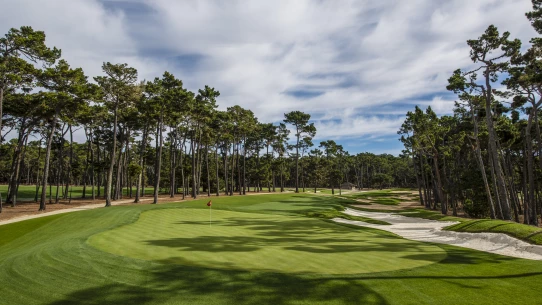
Del Monte™ Golf Course

Rating Snapshot


About
Opened in 1897, Del Monte™ Golf Course is the oldest course in continuous operation west of the Mississippi. Designed by golf and polo enthusiast Charles Maud, this inland course boasts a meandering, hilly layout that has challenged golfers for more than a century.
It was the original host of the California State Amateur-still played on Del Monte's narrow, tree-lined fairways and small,well-protected greens-and continues to serve as one of the three courses on which the Callaway Golf Pebble Beach Invitational is played.
Adjacent to Del Monte™ Golf Course, the Del Monte Pavilion offers an inviting outdoor setting for any special event. Whether you are hosting a corporate outing or a tournament awards ceremony, all events are impeccably catered by the Lodge at Pebble Beach.
| Tee | Par | Length | Rating | Slope |
|---|---|---|---|---|
| Blue | 72 | 6356 yards | 71.6 | 131 |
| White | 72 | 6048 yards | 70.4 | 128 |
| White (W) | 72 | 6048 yards | 76.0 | 132 |
| Combo | 72 | 5587 yards | 67.7 | 126 |
| Combo (W) | 72 | 5587 yards | 73.4 | 125 |
| Green | 72 | 5379 yards | 66.8 | 123 |
| Green (W) | 72 | 5379 yards | 72.5 | 123 |
| Hole | 1 | 2 | 3 | 4 | 5 | 6 | 7 | 8 | 9 | Out | 10 | 11 | 12 | 13 | 14 | 15 | 16 | 17 | 18 | In | Total |
|---|---|---|---|---|---|---|---|---|---|---|---|---|---|---|---|---|---|---|---|---|---|
| Blue M: 71.6/131 | 505 | 328 | 373 | 178 | 326 | 194 | 376 | 383 | 533 | 3196 | 293 | 329 | 166 | 517 | 215 | 327 | 420 | 502 | 391 | 3160 | 6356 |
| White M: 70.4/128 W: 76.0/132 | 486 | 311 | 359 | 158 | 299 | 180 | 362 | 364 | 517 | 3036 | 279 | 322 | 143 | 495 | 201 | 312 | 414 | 481 | 365 | 3012 | 6048 |
| Combo M: 67.7/126 W: 73.4/125 | 486 | 311 | 349 | 158 | 299 | 152 | 296 | 311 | 426 | 2788 | 279 | 322 | 143 | 408 | 180 | 312 | 351 | 481 | 323 | 2799 | 5587 |
| Green M: 66.8/123 W: 72.5/123 | 424 | 295 | 349 | 137 | 283 | 152 | 296 | 311 | 426 | 2673 | 266 | 310 | 126 | 408 | 180 | 293 | 351 | 449 | 323 | 2706 | 5379 |
| Handicap | 9 | 13 | 3 | 15 | 17 | 5 | 1 | 11 | 7 | 18 | 6 | 16 | 10 | 2 | 12 | 4 | 14 | 8 | |||
| Par | 5 | 4 | 4 | 3 | 4 | 3 | 4 | 4 | 5 | 36 | 4 | 4 | 3 | 5 | 3 | 4 | 4 | 5 | 4 | 36 | 72 |
| Handicap (W) | 9 | 13 | 1 | 17 | 15 | 3 | 7 | 11 | 5 | 16 | 6 | 18 | 12 | 2 | 14 | 4 | 10 | 8 |
Course Details
Rentals/Services
Practice/Instruction
Policies
Food & Beverage
Bar, Grill, RestaurantAvailable Facilities
ClubhouseReviews
Reviewer Photos
-
Photo submitted by weekendhacker69420 on 01/02/2024
-
How many turkeys do you see? Photo submitted by pserf on 09/14/2023
-
Photo submitted by pserf on 09/14/2023
-
Photo submitted by mckim111 on 06/17/2023
-
Photo submitted by bingstarr on 02/21/2023
-
Photo submitted by ceecut on 02/06/2023
-
Photo submitted by u00004690349 on 12/24/2022
-
Photo submitted by JasonDeeganGA on 09/23/2022
-
Photo submitted by JasonDeeganGA on 09/23/2022
-
Photo submitted by u314162669241 on 04/30/2022
-
Photo submitted by u314162669241 on 04/30/2022
-
Photo submitted by u314162669241 on 04/30/2022
-
Photo submitted by u314162669241 on 04/30/2022
-
Photo submitted by lbshim on 07/04/2021
-
Love this place Photo submitted by u7326787 on 01/25/2020
-
Straight down the pipe ! Photo submitted by u7326787 on 01/25/2020


Easter Day
Del Monte was a historic courae on a beautiful March day. The course held up to a rainy week. The greens are coming in nicely. It was a great Easter day of golf.
Pretty decent for the cost.
Course in good shape. Cart paths only, doesn’t drain well. Rough was up and sand hard and minmal. No range and no tech.
Play
Nice course. Beatitiful hstorical setting. A forgiiving layout waiting to be played.
Historic Course - A must play when you're in the area
Really enjoyed playing this course. Staff were friendly and helpful; It was a 90-rule day for the carts but it would be an easy course to walk or use a push cart. Greens were just aerated but it was clearly marked as such on GolfNow when I booked. Would like to play again when the greens have fully recovered.
Beautiful day in Monterey
The course was in terrific shape. Fairways were modestly firm: ball never plugged but also very little roll. The layout is straightforward and, with only a couple exceptions, you can see what you have to deal with from the tee. The rough looked benign, but cost a half to full stroke if you strayed off the fairway. Most of the greens are small targets and rolled fast. Two of us got around in 3.5 hours, including several holes where replayed our missed putts! At the end of the round we enjoyed a flavorful lunch at the grill. Service was friendly and fast.
Great course, no snack cart
The good: majestic, historic, beautiful.
The bad: cart path only in the winter even if it's a beautiful day, no outside food or drink allowed and they didn't staff a food, beverage cart to drive around and cater to my thirsty butt... Also you don't get back to the club house to get a drink until you're done with 18.
CLASSIC
Very nice course with nice layout .We played in the winter and it was soaked on fairways.Cart path only for good reasons.We would definitely play again.Some of the best staff around.
Weather is a factor
The course is a great old school design. I unfortunately played there after a rain storm. Cart path only but that wasn’t the issue, the course obviously doesn’t drain well very sloppy lost ball in the rough because of long grass. I suspect that the maintenance couldn’t mow because of the water. I would try the course again on a dryer day.
Good golf course
Del Monte is a very good golf course.
The fairways were narrow and the rough was long and damp.
The greens were smooth and very fast.


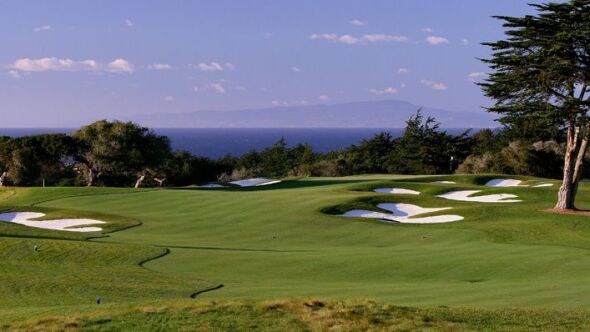


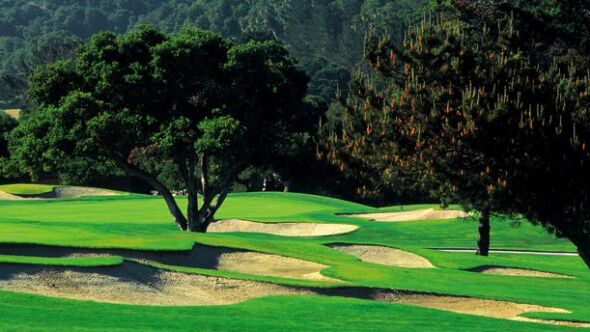

The Hyatt Regency Monterey Resort & Spa Stay & Play Package

Carmel Valley Resort Stay & Play Package
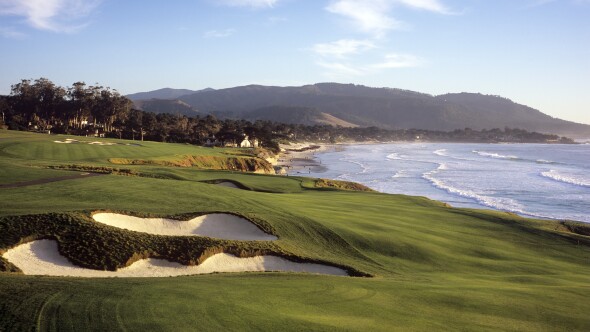
The Inn At Spanish Bay Stay & Play Package

La Quinta Resort & Club Stay & Play Package